9fbaaa8f-e8b6-4a71-be66-346ca438126f

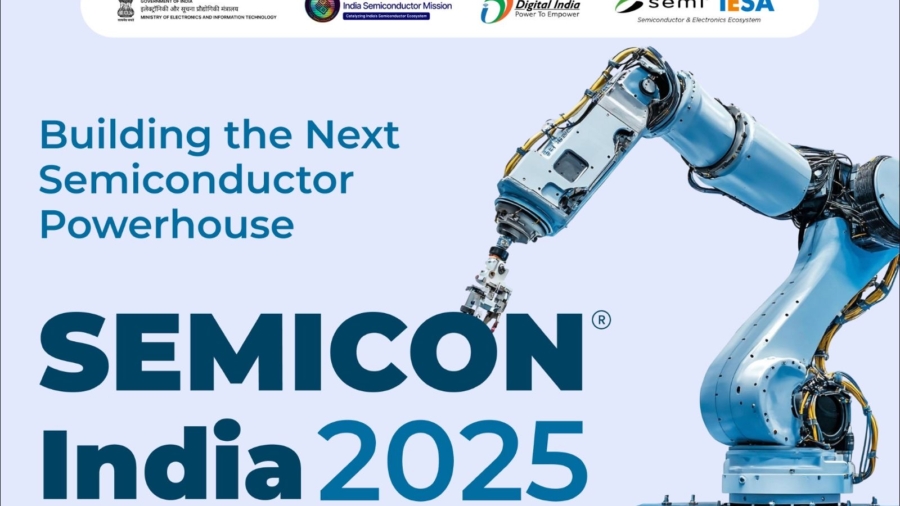
SEMICON India 2025: Accelerating India’s Semiconductor Ecosystem

SEMICON India 2025 represents a major milestone in the development of India’s semiconductor and electronics manufacturing industry. As global demand for semiconductors continues to grow, India is positioning itself as an emerging hub for chip manufacturing, electronics production, and advanced technology development. The event brings together industry leaders, policymakers, investors, and technology innovators to discuss opportunities and collaborations in one of the world’s most critical industries.

Organized with the support of the Semiconductor Industry Association and SEMI, the conference and exhibition serve as a platform to accelerate the growth of India’s semiconductor ecosystem. It highlights how the country is strengthening its capabilities in chip design, semiconductor fabrication, packaging, testing, and electronics manufacturing.


Building a Strong Semiconductor Industry in India

The global semiconductor market plays a fundamental role in powering modern technologies, including smartphones, automobiles, artificial intelligence systems, telecommunications networks, and consumer electronics. Recognizing this strategic importance, India has launched several initiatives to develop domestic semiconductor manufacturing and attract global investments.

SEMICON India 2025 highlights these efforts by showcasing India’s growing capabilities in chip design, research and development, electronics manufacturing, and semiconductor supply chains. The event also encourages collaboration between global technology companies and Indian manufacturers to build resilient and diversified production networks.


A Global Meeting Point for Technology Leaders

One of the key strengths of SEMICON India 2025 is its ability to bring together leading semiconductor companies, equipment manufacturers, materials suppliers, and technology experts from around the world. Industry participants explore the latest developments in areas such as:

  • Advanced semiconductor fabrication technologies
  • Chip design and integrated circuits
  • Electronics manufacturing services (EMS)
  • Semiconductor equipment and materials
  • Artificial intelligence and high-performance computing chips

The event provides a valuable opportunity for companies to understand emerging trends in semiconductor technology and evaluate investment opportunities in India’s expanding electronics manufacturing sector.


Driving Innovation and Global Partnerships

As countries around the world focus on strengthening their semiconductor supply chains, India’s growing role in the global technology landscape is becoming increasingly significant. SEMICON India 2025 plays an important role in encouraging international partnerships, research collaborations, and industrial investments that support long-term growth in the semiconductor industry.

With strong government support, a rapidly growing electronics market, and a large pool of engineering talent, India has the potential to become a key player in the global semiconductor ecosystem.

Events like SEMICON India help connect technology innovation, manufacturing capabilities, and global investment, ensuring that India continues to move forward as a competitive destination for advanced electronics and semiconductor production.

IMTEX_Forming_2026

IMTEX 2026: India’s Premier Machine Tool and Manufacturing Technology Exhibition

IMTEX 2026 stands as one of the most important industrial exhibitions in Asia, bringing together global leaders in machine tools, manufacturing technology, automation, and industrial innovation. Organized by the Indian Machine Tool Manufacturers’ Association (IMTMA), the event serves as a major platform where manufacturers, technology providers, engineers, and industry professionals gather to explore the future of modern manufacturing.

Held at the prestigious Bangalore International Exhibition Centre in Bengaluru, the exhibition attracts thousands of visitors and exhibitors from across the world. With rapid advancements in manufacturing technology, IMTEX continues to play a critical role in showcasing the latest innovations that are transforming industries such as automotive, aerospace, precision engineering, and industrial machinery.


A Global Platform for Manufacturing Innovation

IMTEX 2026 provides a comprehensive platform for companies to display cutting-edge machine tools, CNC technologies, robotics, additive manufacturing, and smart factory solutions. Leading manufacturers from Europe, Asia, and North America participate in the exhibition, making it a global hub for advanced industrial technologies.

Visitors to the exhibition gain valuable insights into the newest manufacturing trends, including Industry 4.0 integration, automation systems, precision machining technologies, and digital manufacturing solutions. For many companies, IMTEX serves as an opportunity to discover new machinery that can significantly improve production efficiency, product quality, and operational reliability.


Opportunities for Manufacturers and Industrial Businesses

For manufacturers across India, especially those involved in precision components, automotive parts, plastics processing, and engineering goods, IMTEX 2026 offers a unique opportunity to connect with technology providers and explore modern production methods.

Businesses attending the exhibition can benefit from:

  • Direct interaction with global machinery manufacturers
  • Access to advanced manufacturing technologies
  • Networking with industry experts and decision-makers
  • Exploring partnerships for technology adoption and business expansion

Such events help Indian manufacturers stay competitive in a rapidly evolving global industrial landscape.


Driving the Future of Indian Manufacturing

India’s manufacturing sector is undergoing significant transformation, driven by technological advancements and increasing global demand for high-quality industrial products. Events like IMTEX 2026 contribute to this transformation by promoting innovation, knowledge exchange, and collaboration across industries.

With growing interest in smart factories, automation, and digital manufacturing, IMTEX continues to highlight how modern technology can improve productivity while reducing operational costs.

As India strengthens its position as a global manufacturing hub, exhibitions such as IMTEX play a vital role in connecting technology, industry, and innovation, helping businesses prepare for the future of advanced manufacturing.

399924-india-us

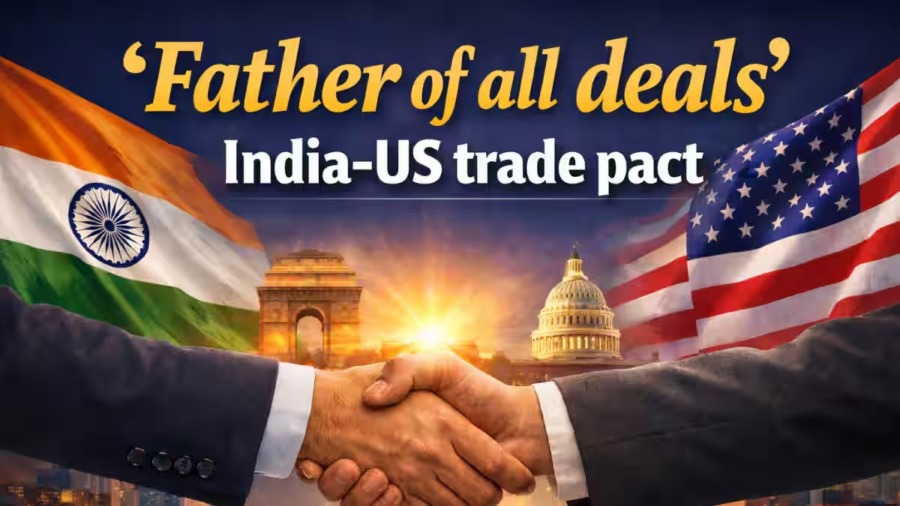
The “Father of All Trade Deals”: The Strategic Trade Partnership Between India and the United States

In recent years, economic cooperation between India and the United States has gained unprecedented momentum. Often referred to by analysts as the “Father of All Trade Deals,” the expanding trade partnership between these two major economies represents one of the most significant developments in global commerce. As the world’s largest democracy and the world’s largest economy strengthen their economic ties, the potential impact on global supply chains, investment flows, and technological collaboration is enormous.

The growing trade relationship is not just about increasing numbers—it reflects a strategic alignment of economic interests, geopolitical cooperation, and long-term industrial development.


Strengthening Bilateral Trade Relations

Trade between India and the United States has grown rapidly over the past decade, making the U.S. one of India’s largest trading partners. Bilateral trade now spans a wide range of sectors, including technology, pharmaceuticals, energy, agriculture, defense equipment, and manufacturing.

India exports products such as pharmaceuticals, textiles, automotive components, IT services, and engineering goods to the United States. In return, the United States exports advanced technology, aircraft equipment, crude oil, medical devices, and high-end machinery to India.

This balanced exchange has created a mutually beneficial economic ecosystem, helping both nations diversify their trade portfolios while reducing dependence on other global manufacturing hubs.


A Strategic Economic Partnership

Beyond traditional trade, the partnership between India and the United States is increasingly focused on strategic industries of the future. Key areas of cooperation include:

  • Semiconductor manufacturing
  • Artificial intelligence and digital technology
  • Clean energy and climate technology
  • Defense and aerospace manufacturing
  • Supply chain resilience

Both countries recognize the importance of building reliable and diversified supply chains, particularly in critical industries such as electronics, defense components, and pharmaceuticals. This collaboration helps reduce global supply chain vulnerabilities and strengthens economic security for both nations.


Opportunities for Businesses and Industries

The expanding trade relationship is creating significant opportunities for manufacturers, exporters, technology companies, and startups. Indian industries are gaining access to one of the world’s largest consumer markets, while American companies are benefiting from India’s rapidly growing economy and expanding middle class.

For Indian manufacturers, especially in sectors like automotive components, plastics, precision engineering, and electronics, the U.S. market presents an opportunity to scale operations and enhance global competitiveness.

Similarly, American firms are increasingly investing in India’s manufacturing ecosystem, digital infrastructure, and innovation sector, creating new partnerships and joint ventures.


The Future of the India–US Trade Alliance

The long-term vision of the trade partnership between India and the United States extends beyond simple trade expansion. Policymakers and industry leaders envision a comprehensive economic alliance that strengthens technology exchange, manufacturing capacity, and innovation ecosystems.

As both countries continue to deepen cooperation through new trade frameworks and strategic initiatives, this partnership has the potential to reshape global trade dynamics in the coming decades.

For businesses around the world, the India–US trade relationship represents not just a bilateral agreement—but a powerful economic engine capable of influencing global markets, industrial development, and international commerce.

Mother of all trade deal – Trade Deal between India and EU

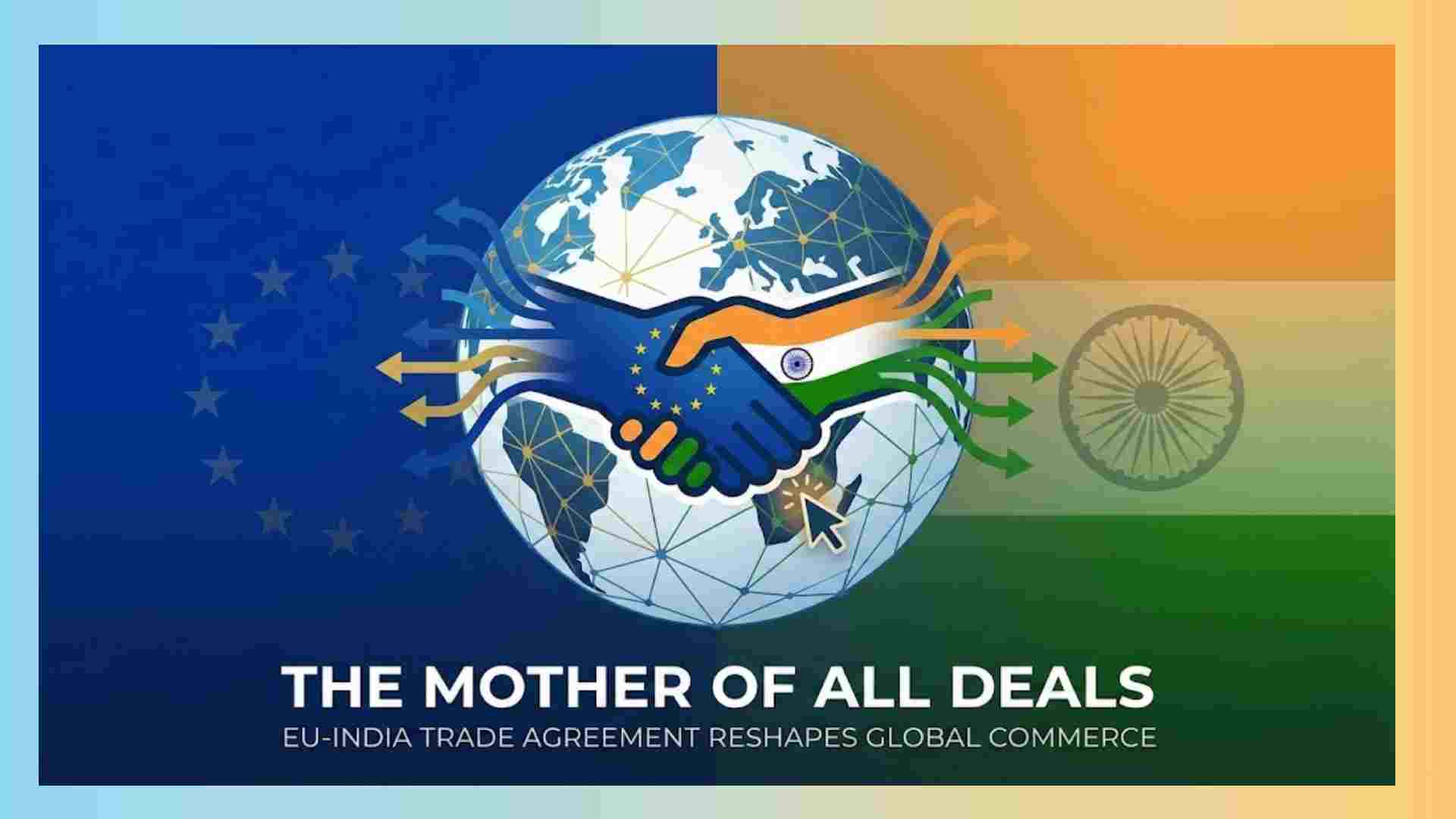
The conclusion of the India–European Union Free Trade Agreement on 27 January 2026 marks a defining moment in India’s economic diplomacy. Negotiated between the world’s 4th and the 2nd largest economies, which together account for nearly 25 per cent of global GDP, the agreement represents the most comprehensive and ambitious trade pact India has ever undertaken. With over 99 per cent of Indian exports by value set to gain preferential access to the European market, the India–EU FTA marks a clear shift in how India engages with global trade and investment flows.
This deal, globally hailed as the “mother of all trade deals”, goes well beyond conventional tariff reduction by establishing modern disciplines covering trade in services, mobility of skilled professionals, digital trade, and regulatory cooperation, hence reflecting the realities of a 21st-century economy. In doing so, it positions India not merely as a participant, but as a country that will shape the rules of global trade.

Leadership That Turned Stalemate into Success
The significance of this achievement becomes clearer when viewed against the long history of stalled negotiations. Discussions on the India–EU Bilateral Trade and Investment Agreement (BITA) had begun as early as 2007, only to be suspended in 2013 after years of inconclusive engagement.
Now under the decisive leadership of Hon’ble Prime Minister Shri Narendra Modi, negotiations were relaunched in May 2021 with a focused and outcome-oriented approach, ultimately culminating in the successful conclusion of the FTA. What changed was not the potential of the partnership, but the intent and decisiveness of leadership guiding it. Central to this effort was the role played by Hon’ble Union Minister of Commerce and Industry Shri Piyush Goyal, who steered these negotiations and ensured that India secured a balanced and ambitious agreement while safeguarding the interests of domestic industry, particularly labour-intensive and manufacturing sectors.

A Landmark Trade Pact: Scope, Scale, and Strategic Impact
What stands out immediately is the sheer scale and scope of the India–EU FTA, which underscores its strategic importance. Together, India and the European Union represent a combined market that accounts for nearly one-third of global trade and about one-quarter of global GDP, underlining the agreement’s systemic importance to the global economy. Bilateral goods trade between India and the EU stood at approximately $ 136.5 billion in 2024–25, with Indian exports accounting for $75.8 billion. Under the agreement, tariff liberalisation spans nearly all industrial sectors, with immediate duty elimination on more than 70 per cent of tariff lines, hence delivering a significant boost to our export competitiveness.
Beyond goods, the FTA creates robust frameworks for services, digital commerce, regulatory cooperation, and skilled mobility, helping Indian enterprises integrate more deeply into European value chains. This will support job creation, innovation, and diversification of India’s trade basket, while at the same time strengthening supply-chain resilience and long-term economic cooperation between the two partners.
It is this broader, people-centric vision of trade that defines the spirit of the agreement. As our Prime Minister Shri Narendra Modi underlined that this is “Free Trade for an Ambitious India, Free Trade for Aspirational Youth, and Free Trade for an Aatmanirbhar India.” The India–EU FTA, therefore, is not just about expanding markets, but about empowering India’s youth, enterprises, and industries to compete with confidence on the global stage while strengthening the foundations of Aatmanirbhar Bharat.

Textiles and Apparel: A Breakthrough for India’s Flagship Sector
Our textiles and apparel sector is the cornerstone of the country’s manufacturing economy and a major source of employment. The European Union forms India’s second-largest market for textiles and apparel. Until now, Indian exporters faced average duties of up to 12%, placing them at a disadvantage compared to competitors such as Bangladesh, Vietnam, and Turkey. This FTA eliminates these duties across all textile and clothing tariff lines, granting zero-duty access to a market which is worth nearly $263.5 billion. India’s current textile exports to the EU, valued at around $7.2 billion, are therefore poised for rapid expansion as our producers achieve parity in pricing and competitiveness. Enhanced market access is expected to drive higher production, deeper supply-chain linkages, and greater participation of MSMEs and labour-intensive clusters, hence giving a big push to the employment generation.
This breakthrough aligns seamlessly with our Hon’ble Prime Minister’s Vision 2030 for India’s textiles sector, which aims to expand the industry from $176 billion to $350 billion, and raise exports to $100 billion. With the guidance of Hon’ble Union Minister of Textiles Shri Giriraj Singh, the Indian textiles sector is well positioned to fully leverage the opportunities created by this transformative agreement.

India’s Expanding Trade Footprint and the Textile Opportunity
The India–EU FTA also marks India’s eighth Free Trade Agreement since 2021, highlighting a decisive shift in India’s trade engagement with the world. Beginning with the Mauritius CECPA (2021), which was India’s first-ever trade agreement with an African nation, the momentum continued with the UAE CEPA (2022), followed by the Australia ECTA (2022), which gave Indian exporters zero-tariff access to the Australian market. This was followed by the EFTA TEPA (2024/25), and the UK CETA (2025) under which 99% of Indian exports received tariff-free access. The Oman CEPA (2025) complemented this, offering India its largest-ever tariff coverage in the Gulf region. The New Zealand FTA (2025) became India’s fastest trade deal, with the two countries reaching an agreement in just over nine months. Now with the India–EU FTA, we stand at the pinnacle of this journey.

Trade as a Pillar of Viksit Bharat @2047
The India–EU Free Trade Agreement is not merely a commercial accord; it is a powerful statement of India’s rise which is anchored in decisive leadership, strategic clarity, and an unwavering confidence in the nation’s capabilities. European Commission President Ursula von der Leyen has rightly observed: “When India succeeds, the world is more stable, more prosperous and more secure.” The India–EU FTA gives concrete shape to this belief, reflecting a partnership built on trust, shared prosperity, and long-term goals.
As India advances towards the goal of Viksit Bharat @2047, this landmark agreement strengthens India’s position as a global economic powerhouse. It’s Modi’s move to firmly place India as a confident economic partner on the world stage, one that negotiates from strength, delivers outcomes, and expands opportunity for its people.

Writer: Pabitra Margherita, MoS External Affairs & Textiles

VIKSIT BHARAT

PM Modi’s Vision – Viksit Bharat 2047

India with PM Modi vision of Viksit Bharat by 2047 is growing rapidly and have highest growth rate in the world. 

India is now the No.1 emerging market to invest In for the overseas companies from Japan, Taiwan, China,  Germany, France, UK, US, European, UAE & Middle east nations. The Made in India approach, Production Link Incentive Scheme along with other benefits for boosting manufacturing sector, India has imroved its position in the global trade to the 4th largest economy in the world and moving towards No.3 economy.

In this ever changing scenario where the world order of major economies is deviated,   We could connect you with a suitable supplier or customer according to your requirements. Indo SK Services support companies as a facilitator, agent, trader and consultant  according to the business model or needs of the customer.

India`s PM Modi Ji introduced 4D to explain about India.- Democracy, Demography, Demand and Deregulation/ Decisiveness

  • Democracy : Emphasizing India’s strong and stable democratic framework and political stability,  which provides a secure environment for investment.
  • Demography : Highlighting India’s large, young, and talented population as a significant growth engine  and demographic dividend.
  • Demand : Pointing to the increasing purchasing power and aspirations of India’s large population,  which drives significant market demand across various sectors (e.g Automotive, Electronics).
  • Deregulation : De-licensing and de-bottlenecking, focusing on ease of doing business and removing bureaucratic hurdles.
  • Decisiveness : Government’s ability to make quick and impactful policy decisions like the Goods and Services Tax (GST) or corporate tax cuts.